Death
"The first grain falls as simply as the last"
The Wound
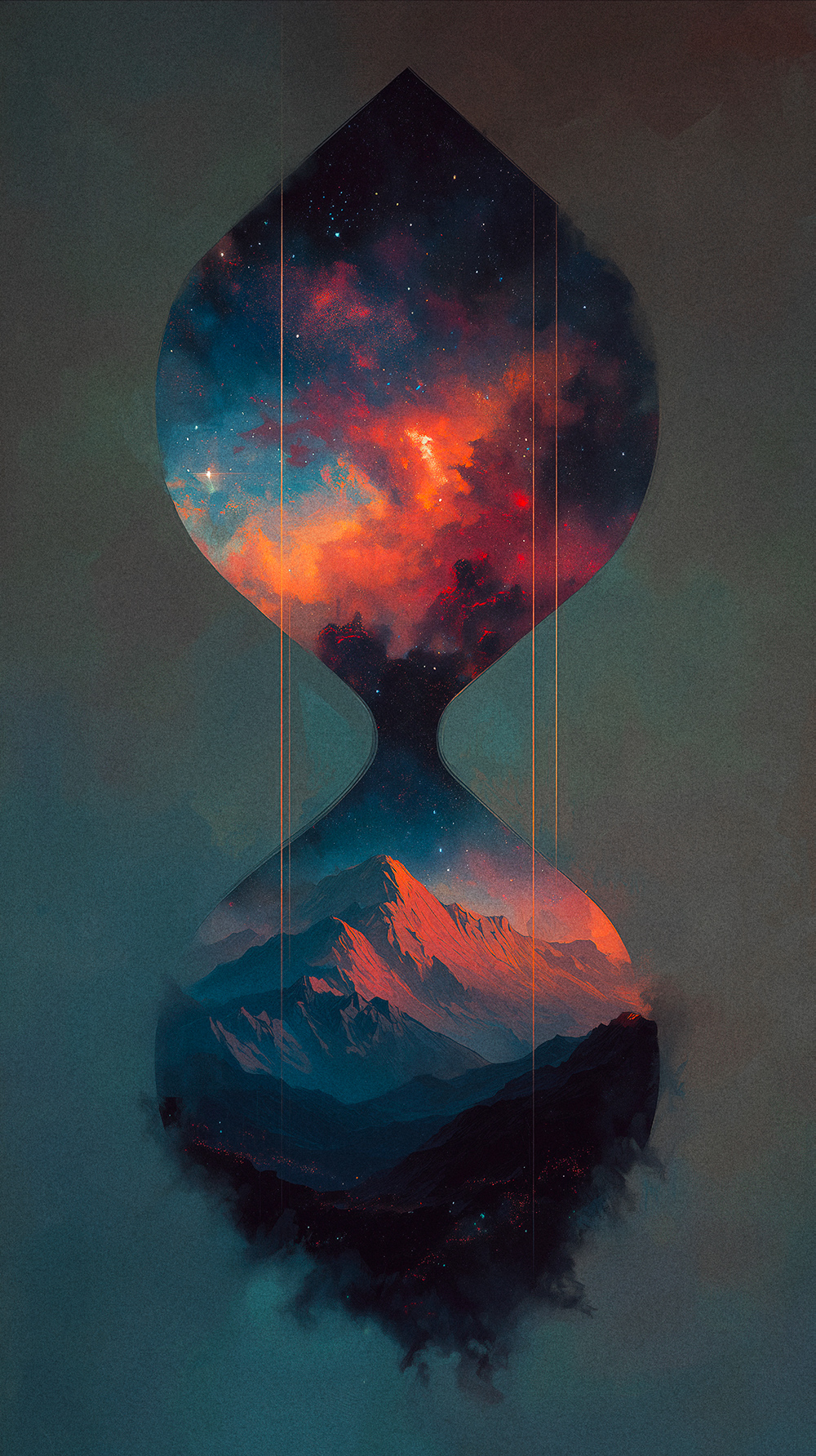
An hourglass: a throat barely wide enough for one grain. Above it, sand that has not yet fallen. Below, grains that will never move again. A grain is only alive in the falling. And the last grain falls the way every grain falls – its only distinction is that after, there is no more.
The Path
You rehearse the last grain. You imagine it pausing at the throat, as if gravity might wait for you. But look where you stand while you rehearse: the lower bulb, amongst grains that have already fallen. Cupping them, hoping they're still warm. Dread and nostalgia face opposite directions but stand on the same still ground. The grain in the throat does not look up or down. It falls. The only life you have is the heat of its passage.
The Shadow
He stood at the edge of his son's wedding, watching his boy – his boy, somehow a man – pull his bride into their first dance. His wife touched his arm, her fingers warm. Dance with me. The song would end in two minutes. Later, he said. There would be other songs. She wanted Prague. The brochure sat on the counter for months until the pages yellowed and stuck. One morning it was gone. She never mentioned it again. She never left him. Became impossible to reach. Eventually he couldn't remember which of them had moved. She sits at the exact distance he spent a lifetime teaching her. He wants to say something. Wants to ask her to dance. The song ended thirty years ago. ❖ He watched his daughter blow out five candles. Before he could fix the image – cheeks puffed, light dancing in her eyes – the moment had already become memory. He reached for it. Gone. He learned to live in what had already happened – rearranging what had dropped, replaying each cascade. His daughter is forty now. She sits beside his bed, holding his hand. Grey at her temples, her mother's voice. Her hand is warm but he can't feel it. Only old sand, shifting. His fingers loosen in hers. The last thing he sees is a birthday cake, five candles, a small face frozen in the moment before the wish.
Epistrophe
The hourglass empties. The last grain falls – the same quiet drop, the same gravity. The sand settles. You see the shape you made without meaning to. Each grain where it fell, the ones you noticed, the ones you wasted, the ones that felt like years. Light shifts beyond the glass. A hand reaches and the hourglass turns. The sand begins again. Somewhere, stone becomes shelter. Somewhere, a crack reveals a star. Somewhere, the first grain falls—
DEATH
The first grain falls as simply as the last
Death
"The first grain falls as simply as the last"
The Wound
An hourglass: a throat barely wide enough for one grain. Above it, sand that has not yet fallen. Below, grains that will never move again. A grain is only alive in the falling. And the last grain falls the way every grain falls – its only distinction is that after, there is no more.
The Path
You rehearse the last grain. You imagine it pausing at the throat, as if gravity might wait for you. But look where you stand while you rehearse: the lower bulb, amongst grains that have already fallen. Cupping them, hoping they're still warm. Dread and nostalgia face opposite directions but stand on the same still ground. The grain in the throat does not look up or down. It falls. The only life you have is the heat of its passage.
The Shadow
He stood at the edge of his son's wedding, watching his boy – his boy, somehow a man – pull his bride into their first dance. His wife touched his arm, her fingers warm. Dance with me. The song would end in two minutes. Later, he said. There would be other songs. She wanted Prague. The brochure sat on the counter for months until the pages yellowed and stuck. One morning it was gone. She never mentioned it again. She never left him. Became impossible to reach. Eventually he couldn't remember which of them had moved. She sits at the exact distance he spent a lifetime teaching her. He wants to say something. Wants to ask her to dance. The song ended thirty years ago. ❖ He watched his daughter blow out five candles. Before he could fix the image – cheeks puffed, light dancing in her eyes – the moment had already become memory. He reached for it. Gone. He learned to live in what had already happened – rearranging what had dropped, replaying each cascade. His daughter is forty now. She sits beside his bed, holding his hand. Grey at her temples, her mother's voice. Her hand is warm but he can't feel it. Only old sand, shifting. His fingers loosen in hers. The last thing he sees is a birthday cake, five candles, a small face frozen in the moment before the wish.
Epistrophe
The hourglass empties. The last grain falls – the same quiet drop, the same gravity. The sand settles. You see the shape you made without meaning to. Each grain where it fell, the ones you noticed, the ones you wasted, the ones that felt like years. Light shifts beyond the glass. A hand reaches and the hourglass turns. The sand begins again. Somewhere, stone becomes shelter. Somewhere, a crack reveals a star. Somewhere, the first grain falls—