Forgiveness
"Your fist feeds what it holds"
The Wound
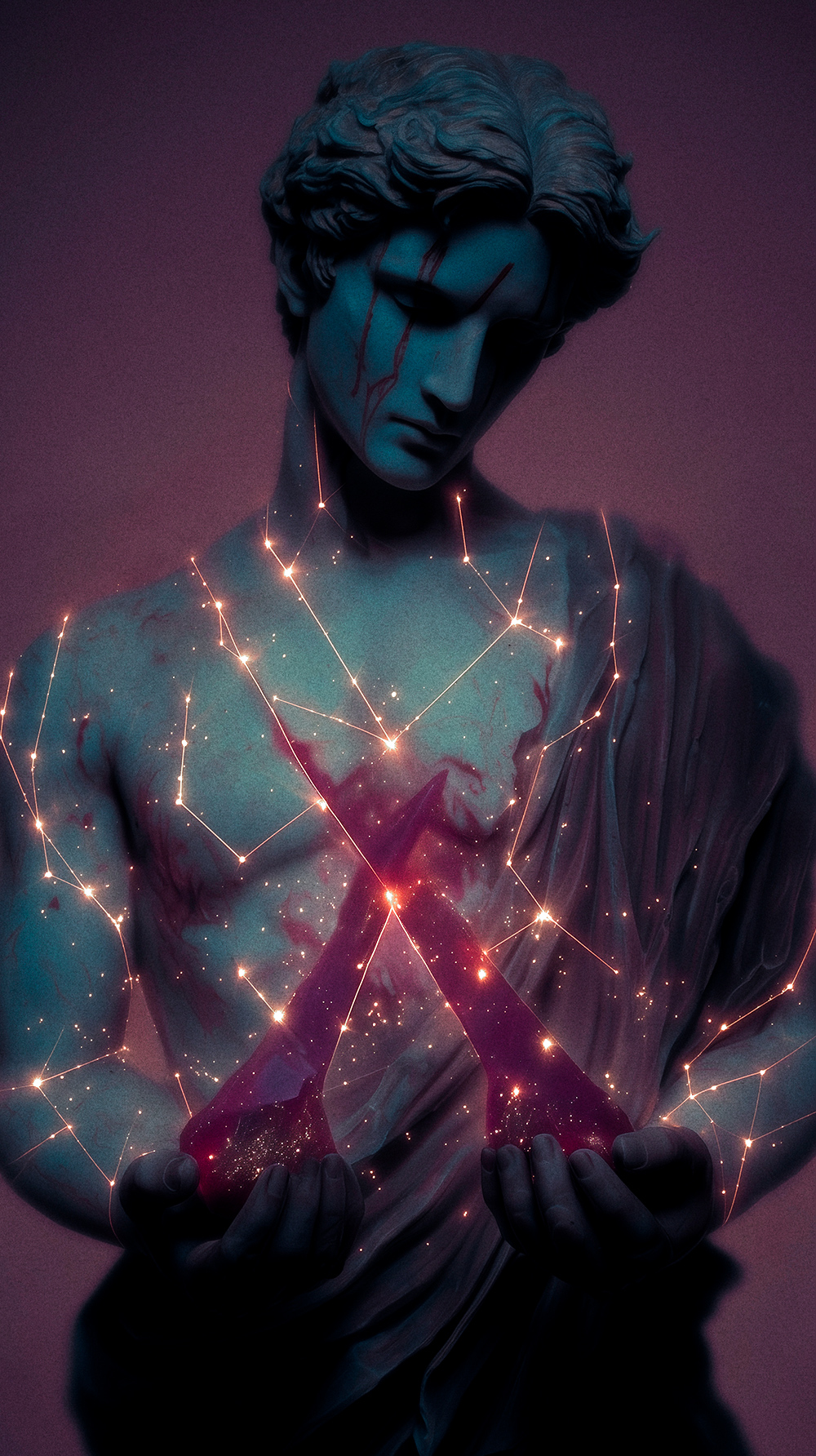
You picked up the shard while it was still dripping. Proof. That was years ago. Your fist has not opened since. First the fingers curled for protection. Then for proof. Then the tendons locked, the skin grew over, and one morning you woke with your palm fused to glass, no longer holding it, but held by it. Blood on every door handle, every page you've tried to turn. You greet the world knuckles–first, certain that opening means losing the only proof you were ever cut.
The Path
Look at your hand. Knuckles white, skin cracked where it fused to glass. Your blood – still warm – feeds a memory that went cold years ago. They cut you once. You have cut yourself every morning since. Unclenching will hurt. The skin will tear where it grew over the glass. Or you finish their work for them – die with your fist still closed around glass they forgot existed. Your fingers open. One by one. The shard falls – hardly a sou? The palm wears its scar. It always will. But the hand is open.
The Shadow
Some hands would rather heal around the glass. The Resolute wakes each morning with his fist already raised – his credential, his evidence. In every conversation the hand rises; in every silence the wound speaks. He gathers others who bleed of similar glass. Together they compare cuts, argue whose runs deepest. Anyone whose wound has closed is suspect; anyone who speaks of release is a traitor. Some nights the fist feels like prison. By morning the feeling has passed and the hand rises again. He cannot imagine who he would be with empty hands. ❖ The Serene pushes the shard past feeling, past memory, and builds her life on top. I have healed, she tells herself. She smiles with a palm that looks open but will not uncurl. Marries, raises children, assembles a life so ordinary it could belong to anyone, even though she is not in it. She buried herself with it. The wound returns anyway – as rage she cannot name. Her children map the days her eyes turn to glass. Their spines memorise the silence that means not today. They learn to read the weather of a smile that never changes – and one day, they stop reading. Her children, cleaning out the house, find no photographs from before. Only glass, held in the shape of a fist that never opened.
The Cut
What bled while your fist stayed closed?
FORGIVENESS
Your fist feeds what it holds
Forgiveness
"Your fist feeds what it holds"
The Wound
You picked up the shard while it was still dripping. Proof. That was years ago. Your fist has not opened since. First the fingers curled for protection. Then for proof. Then the tendons locked, the skin grew over, and one morning you woke with your palm fused to glass, no longer holding it, but held by it. Blood on every door handle, every page you've tried to turn. You greet the world knuckles–first, certain that opening means losing the only proof you were ever cut.
The Path
Look at your hand. Knuckles white, skin cracked where it fused to glass. Your blood – still warm – feeds a memory that went cold years ago. They cut you once. You have cut yourself every morning since. Unclenching will hurt. The skin will tear where it grew over the glass. Or you finish their work for them – die with your fist still closed around glass they forgot existed. Your fingers open. One by one. The shard falls – hardly a sou? The palm wears its scar. It always will. But the hand is open.
The Shadow
Some hands would rather heal around the glass. The Resolute wakes each morning with his fist already raised – his credential, his evidence. In every conversation the hand rises; in every silence the wound speaks. He gathers others who bleed of similar glass. Together they compare cuts, argue whose runs deepest. Anyone whose wound has closed is suspect; anyone who speaks of release is a traitor. Some nights the fist feels like prison. By morning the feeling has passed and the hand rises again. He cannot imagine who he would be with empty hands. ❖ The Serene pushes the shard past feeling, past memory, and builds her life on top. I have healed, she tells herself. She smiles with a palm that looks open but will not uncurl. Marries, raises children, assembles a life so ordinary it could belong to anyone, even though she is not in it. She buried herself with it. The wound returns anyway – as rage she cannot name. Her children map the days her eyes turn to glass. Their spines memorise the silence that means not today. They learn to read the weather of a smile that never changes – and one day, they stop reading. Her children, cleaning out the house, find no photographs from before. Only glass, held in the shape of a fist that never opened.
The Cut
What bled while your fist stayed closed?