Sophrosyne
Arete
"Music lives one breath before the snap"
The Threshold
Fingers on the peg. The string resists; the pull runs from the wire into your fingertips, climbs the wrist, settles in the bone. The peg presses into your thumb; you turn it, and the pitch climbs. A quarter-turn more and the note blooms: warm, full, ringing with a sweetness that arrives before its name. You find the narrow band where the string sings: yielding enough for the note, not enough to give way. A shade slack, the note blurs; a breath tight, the wire screams. Music lives here – where the note has all it needs, and no more.
The Way
Your hand found the place. Finding is not keeping. Two temptations pull in your wrist. One is the pull towards slack: let the string sag until it asks nothing, until the note dies and death feels like rest. The other is the pull past singing: turn again, chase the note higher than it can hold, and when the wire lets go, the snap arrives like joy. The hand wants an end to the asking. The ear will not grant one. Between them, in the narrow live band, the note goes on needing you. By morning the instrument has taken the night into its body. The wood has drunk the damp, the string has slackened by a hair, the note has slipped a little from where you left it. Last night's perfect is this morning's flat. Each day, your hand returns to the peg: a hair tighter, a breath looser, until the string finds its voice.
The Shadow
The Certain found the note on an afternoon she remembers only by its sound. It stopped her breath. Now her hands remember the sound of perfection. She hangs the instrument on the wall. Some evenings she stands before it. Her finger hovers over the string. Before skin finds wire, the old resistance is already in her hand. She pulls back. She tells visitors she could still play – only if the season were right, only if her hands were warm. What she does not say: If I play, I kill the memory. The wood dries. Untouched, the string rusts against the bridge. Then one midwinter the string lets go on its own – one note in an empty room, the last the instrument will ever make. She waits for grief. What comes instead is relief: no hand can ever ask anything of that note again. ❖ The Precise hears the note arrive, and in the same breath hears it begin to leave: a fraction flat, a ghost of dissonance. His hand moves to the peg. He cannot let the string settle. Each correction breeds another: flat, sharp, flatter, sharper. Some nights he finds the note: true, full. He holds his breath for three, four seconds while the note steadies under his hand. But he cannot trust it. Even in the sweetness, his ear hunts the first fray. He tightens until the note is gone. At dawn, there is no note left. His hand is still at the peg, correcting a note that no longer exists.
The Cut
Which note did you kill to keep it perfect?
Previous
Integrity
Next
Discipline
Sophrosyne
"Music lives one breath before the snap"
Arete
SOPHROSYNE
Music lives one breath before the snap
The Threshold
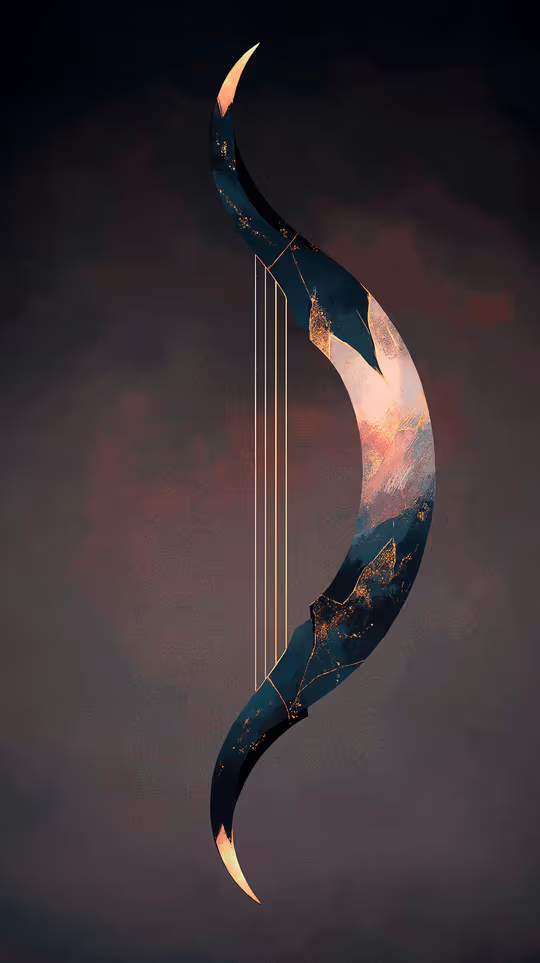
Fingers on the peg. The string resists; the pull runs from the wire into your fingertips, climbs the wrist, settles in the bone. The peg presses into your thumb; you turn it, and the pitch climbs. A quarter-turn more and the note blooms: warm, full, ringing with a sweetness that arrives before its name. You find the narrow band where the string sings: yielding enough for the note, not enough to give way. A shade slack, the note blurs; a breath tight, the wire screams. Music lives here – where the note has all it needs, and no more.
The Way
Your hand found the place. Finding is not keeping. Two temptations pull in your wrist. One is the pull towards slack: let the string sag until it asks nothing, until the note dies and death feels like rest. The other is the pull past singing: turn again, chase the note higher than it can hold, and when the wire lets go, the snap arrives like joy. The hand wants an end to the asking. The ear will not grant one. Between them, in the narrow live band, the note goes on needing you. By morning the instrument has taken the night into its body. The wood has drunk the damp, the string has slackened by a hair, the note has slipped a little from where you left it. Last night's perfect is this morning's flat. Each day, your hand returns to the peg: a hair tighter, a breath looser, until the string finds its voice.
The Shadow
The Certain found the note on an afternoon she remembers only by its sound. It stopped her breath. Now her hands remember the sound of perfection. She hangs the instrument on the wall. Some evenings she stands before it. Her finger hovers over the string. Before skin finds wire, the old resistance is already in her hand. She pulls back. She tells visitors she could still play – only if the season were right, only if her hands were warm. What she does not say: If I play, I kill the memory. The wood dries. Untouched, the string rusts against the bridge. Then one midwinter the string lets go on its own – one note in an empty room, the last the instrument will ever make. She waits for grief. What comes instead is relief: no hand can ever ask anything of that note again. ❖ The Precise hears the note arrive, and in the same breath hears it begin to leave: a fraction flat, a ghost of dissonance. His hand moves to the peg. He cannot let the string settle. Each correction breeds another: flat, sharp, flatter, sharper. Some nights he finds the note: true, full. He holds his breath for three, four seconds while the note steadies under his hand. But he cannot trust it. Even in the sweetness, his ear hunts the first fray. He tightens until the note is gone. At dawn, there is no note left. His hand is still at the peg, correcting a note that no longer exists.
The Cut
Which note did you kill to keep it perfect?
Previous
Integrity
Next
Discipline