A Codex of Becoming
The gentlest lie keeps you from who you were going to become. You were loved into stillness. They smoothed your edges, hushed your hungers, kept you in borrowed light.
Until, one morning, your hand closes around something in the dark. You cannot see its shape. You know only this: it will not let go, and the hand that holds it is no longer the same.
This is the codex for what comes.
Dedicated to my mother, Eleni, who taught me you can hold your shape inside the fire.
Mneme
You wake beneath rubble. Stone meant to crush you has become shelter. Dust thickens on your tongue.
You stay still, pressing your spine to the stone until the darkness learns your shape. Years bleed away before you can name them years. You cradle your wounds, terrified that healing will steal them from you. Then the stone gives. A crack, no wider than a breath. Through it: one star. Another. Then more sky than stone can hold. Before thought, your hands are at the crack. Your fingers find the lip of light, tighten, and refuse to let go.


Harmonia
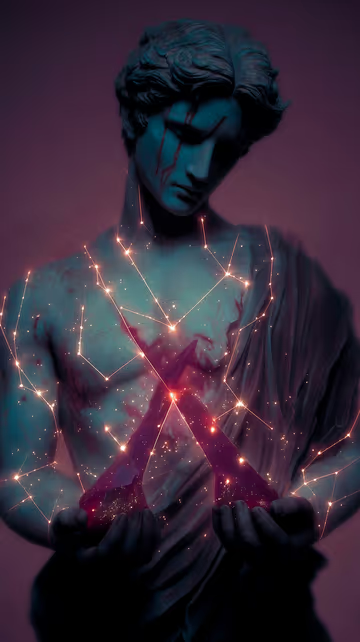
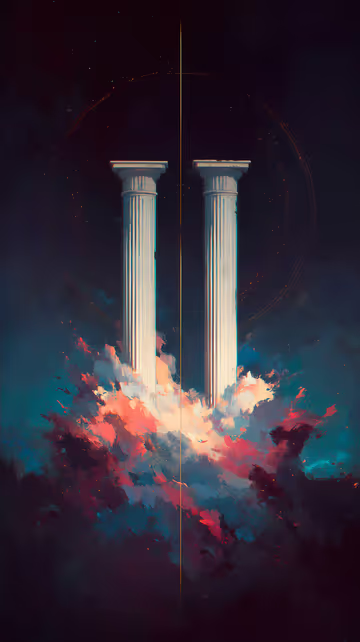
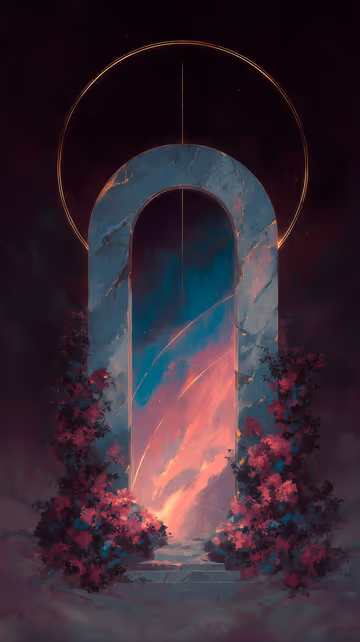
An arch is a conspiracy of falling. Each stone leans towards ruin and, in leaning, catches the next. You rose from the rubble alone. No stone is built to bear its own fall.
But leaning felt like falling; you had already fallen once. You ground your corners smooth; smooth, you believed, meant strong. What shame stripped away was the notch another stone could catch. Now you lean again. For one breath, there is only falling. Then another stone takes your weight, and your weight takes theirs. What was meant to fall becomes an arch.


Arete
You arrive as ore, mass before form. Heavy with all you cannot yet become.
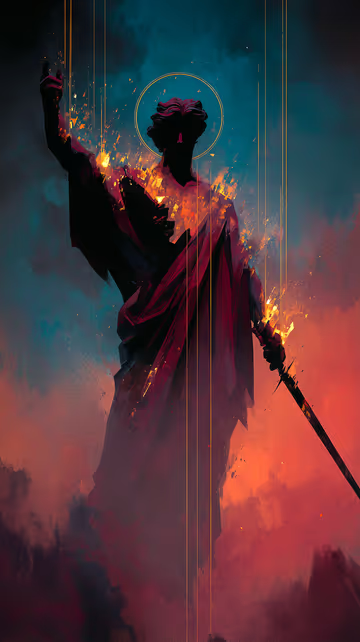
The forge does not ask permission. Heat arrives, takes the surface, then the depth, until what was hard remembers how to flow. Only in melting do copper and tin find one another. Neither leaves as it entered. What pours from the crucible is neither one, and stronger than both. The mould breaks to release you. Then the hammer. Each blow finds what the casting hid: the buried hollow, the hairline fault. Bronze does not lie to iron. What rings true, rings. What is hollow chatters. The edge was always in the ore. The voice was yours before the fire.


Telos
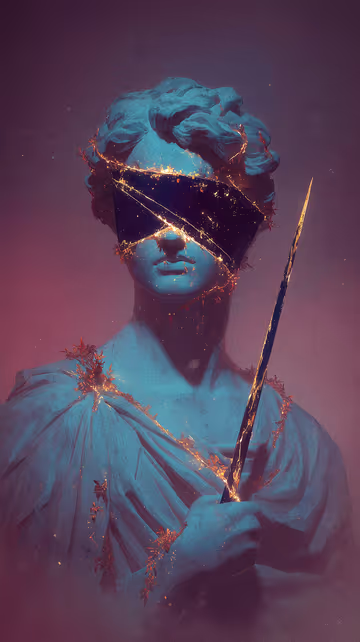
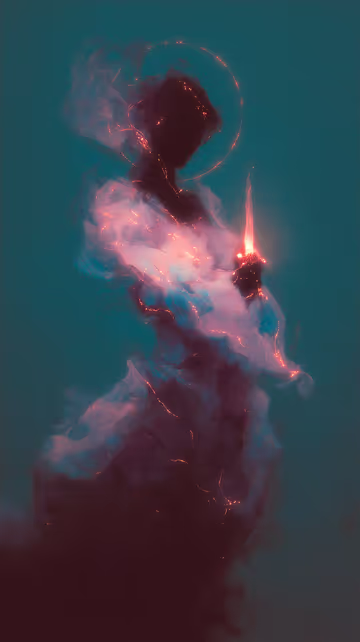
Your shape sleeps inside the stone. You are what the marble hides from the light, waiting for the hand steady enough to remove what is not you.
All the selves you might become, and all the selves the chisel will kill, sleep in your veins. The first strike is loss: shards fall, and what you were falls with them. Yet in the pale wound, a line appears that no will of yours could have drawn. The line deepens. Finds edge. Finds shoulder. Finds face. The chisel strikes again and again, until the stone stands where you stood. The chisel falls from your hand. The stone looks back.


Metanoia
My iron was not my stain.
It was the blade
that cut my pattern free.
My grit was not my grief.
It was the pearl
the wound became.
My lean was not my fall.
It was the bridge
the falling stones became.
My string was not my noose.
It was the tension
that sent the arrow true.
My stone was not my tomb.
It was the arch—
and I, the weight that held.
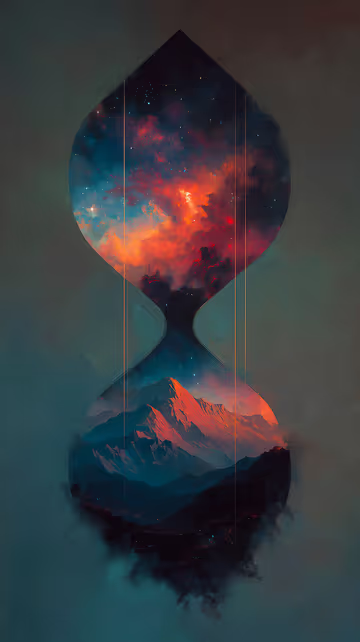
The last grain falls
as simply as the first.
The glass stands whole.
What I carried carries on.
Epilogue
You have reached the final page of this codex: the map's edge, where ink yields to open water.
These axioms speak in metal and scar, in stone and arch.
Carved from Greek stone and a mother's iron; forged in a fire that leaves few whole. They offer one way of seeing a life. Not the only one.
If you walked these pages honestly, they demanded a price: to look upon your own story without flinching; to hold still while the truth did its work.
Understand this. No one owes this book their pain. These axioms assume you have ground to stand on, space to choose, margin to begin again. When your body, your history, or the world itself pins you, answer first to that weight. Not to any ideal on a page.
The measure of these axioms is simple: do they root you? Do they let you carry your own weight without crushing what you love?
If so, use them. Wrestle with them. Let them become tools in your hands.
If some never fit, trust that instinct. Not every blade belongs to every hand. And if you outgrow this codex, set it down like a tool that has finished its work: with gratitude, not guilt.
These pages have succeeded if they helped you stand more truly in your own life. They have failed if they became another prison.
The moment this codex feels less like a doorway and more like a locked room, do not make peace with the walls. Break them.
Past these pages, the ink runs out. The arch remains unfinished. One stone still waits for your hand.
The rest is not written. It is built.
– Vitali Liouti